Wandering imaginative landscapes: Part one
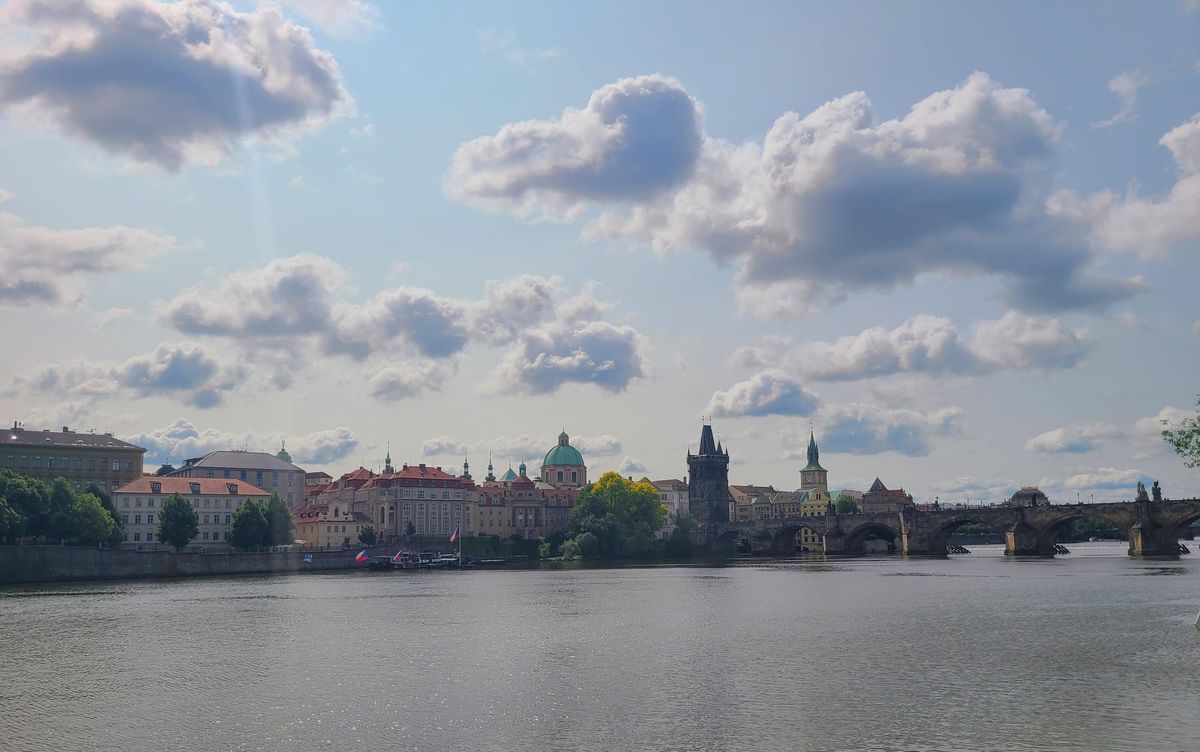
You remember when I mentioned that whole dissertation thingie? Maybe not, if you haven't read the Invitation to Ayla's Story. But, well, so there's this dissertation thingie that I'm trying to write (still futzing around with the proposal, in case you're wondering about timelines) and I wrote a little paper as...futzing praxis, shall we say. As I may have mentioned--fifty shades of nerd, and academics are nothing if not nerds with larger than average egos. Pretty sure I'm not confident enough to have an academic-size ego, though I do have my moments. I even had the chance to present the paper at conference in Prague, Czech Republic, which was quite the opportunity to wander.
In any case! I thought I might share that paper (edited and further fiddled with) in bits and bobs on the off chance you might have some insight to share. I'm big on the collective storytelling (and again, what is a dissertation if not a kind of storytelling?), as you will see below.
So here is the first part, with others yet to come. Hopefully. (And I promise that I quote more than just Édouard Glissant further on--he's just really, really great.)
Starting under my feet
All that is gold does not glitter,
Not all those who wander are lost;
The old that is strong does not wither,
Deep roots are not reached by the frost.
-- J. R. R. Tolkien, The Fellowship of the Ring
When I was younger, I was unusually restless for a kid who had never been on a vacation and rarely traveled farther than the two and half-hour drive to the beach that our family occasionally took. As I got older and found that I couldn’t settle down, to live or to work, I was comforted by Tolkien’s epic tale of hobbits who stepped outside of their own homebody natures (read: stereotype) to venture into the wide world. I also wanted to venture into the wide world. So when I came across Édouard Glissant’s Poetics of Diversity,[1] with its entreaty for imaginative strength and celebration of wanderings, I felt the call deep in my bones. Wandering the pages of Glissant’s writing and interviews, I felt an odd, vibrating resonance that I had felt only once before, reading Epeli Hau‛ofa’s Our Sea of Islands.[2] What is it, I wonder, that creates these odd tendrils of connection across oceans to men born of islands? Does it have something to do with how I longed for the sea as I grew up in what was basically a desert? Or is it a shared wandering spirit and a penchant for whimsy and playfulness? This, too, is the start of another journey. A little unusual, perhaps, but I ask for a bit of your indulgence—I have a destination in mind.
In the Tao Te Ching,[3] Chinese philosopher Lao Tsu advises that “[a] journey of a thousand miles starts under one’s feet” and so it is with this journey, starting under my feet. I begin with a question: Can digital worlds act as spaces for imagining different ways of knowing and being? Glissant believed that it is only through art and poetry that as a collective we can “change the imaginations of human communities”[4] We must do this, he advised. “It’s true that in order to conquer the world, one had first to dream it,”[5] he wrote, and art (broadly defined) is a space for imagining the world. But he was writing before and outside of the ubiquity of the internet, AOL Online, and even internet relay chat (IRC), those early forays into digital spaces that one could imagine as a new form of community. His entreaties are reminiscent of the Frankfurt School’s distrust of technology in general. I wonder what he would have thought of the twenty-first century’s diverse and robust digital communities. Would he have the imaginative strength to consider these spaces, too, as spaces within which we can “change the imaginations of human communities?”
Thinking along these lines, I can revise my initial question to one that will carry us further: How can digital worlds act as spaces for imagining different ways of knowing and being? And here, I am specifically referring to a digital gaming space, coming to life on YouTube and serving as a catalyst of discussion, informal learning, and imaginings of a diversity without hierarchy—“a plurality to which we all consent.”[6] I am specifically referring to Hermitcraft, a group of YouTube content creators who play Minecraft together on a single server and publicly share their shenanigans. This is a new world for many, a new language, but it is one in which our children, our students, have grown up, and live and work and play. We live and work and play in the presence of this world and its languages and without at least trying to understand, how will we connect with those we teach and who will move the world (worlds?) forward? I wonder about these things. Too, this is what is currently beneath my feet and the world I am hoping you will explore with me. Ready?
Diversity and the Chaos World
Diversity means differences that encounter each other, adjust, clash, harmonize and produce something unforeseeable.
--Édouard Glissant, Introduction to a Poetics of Diversity, p. 64
I played Dungeons & Dragons in high school, way back in the late 1900s. AD&D, 2nd edition. I played video games, too, but they were hardly imaginative spaces back then. Players would follow the pre-determined path programmers laid out and victory was had at the end of a linear progression. They were fun and it was exciting when you finally saved the princess, but there was only one path to success and “winning” was finding that one path. That was how success was defined.
But this is where Dungeons & Dragons differed. A “tabletop RPG,”[7] played through collaborative storytelling, it depends upon the imagination of the players, not only for the characters, but for the story itself. The game rules are the boundaries that guide player action, but even those can be interpreted and bent. Players embody their characters and group together to collectively pursue a purpose, whether that be solving a puzzle, finding a treasure, or saving a town from the clutches of an evil despot (or, you know, becoming a town’s evil despots). It is an oral game, grounded in narrative and shared around a table.
Sociologist Gary Alan Fine published an ethnography of tabletop role-playing, arguing that:
[f]antasy gamers create cultural systems as their avocation—worlds of imagination formed by the participants, given the constraints of their own knowledge and the structure provided by the rules. Analyzing these fantasy games provides insight into the creation of group cultures, and the way in which these group cultures transform more extensive cultural systems. Each gaming group interprets, defines, and transforms cultural elements in its sphere of knowledge into the cultural framework of an imagined society.[8]
After a year of tabletop role-playing, Fine described some of the ways in which tabletop gaming spaces are spaces to imagine new ways of knowing and being that can then be transferred into existing cultural systems. His findings confirm my own experience.
One of the most valuable ways of thinking and interacting that I have carried with me from those early days of adventuring variously as an apprentice cleric, an orphaned rogue, and an introverted warrior, is that this collaborative game is an example of Glissant’s diversity—interdependent difference without hierarchy, distinction without oppression. Each of the players in the party are different—different fantasy race, different fantasy profession, different disposition and history—but each of their skills and talents are necessary for the group to succeed.
If the rogue doesn’t disarm the trap, the party might take damage before entering the dragon’s lair. If the warrior doesn’t run in to get the dragon’s attention, the dragon might attack weaker party members. If the cleric isn’t focused on healing the warrior, the warrior won’t be able to keep the dragon distracted. Despite their differences, and yes, despite interparty conflict, they succeed or fail together. It is an ideal that requires imaginative strength, but it imagines the “multiplicities of the reality of the world-totality”[9]—a realized whole that is more than the sum of its constitutive parts, an unexpected happening that results from the meeting of difference.
In the planet-wide encounter of cultures, that we experience as chaos, it seems that we no longer have any landmarks. Everywhere we look, we find catastrophe and death throes. We despair of the chaos-world. But this is because we are still trying to discern in it a sovereign order that would once again bring the world-totality back to a reductive unity. Let us have the imaginative and utopian strength to realize that this chaos is not the apocalyptic chaos of the end of the world. Chaos is beautiful when one understands that all its elements are equally necessary. In the meeting up of all the world’s cultures as exerting an action of both liberating unity and liberating diversity.
--Édouard Glissant, Introduction to a Poetics of Diversity, p. 45
We seem to be experiencing our current world of diverse peoples, diverse thoughts, diverse perspectives as that frightening chaos world. We do seem to despair of it as we see polarization that treats difference as threatening and seeks to incorporate and subsume diversity into a unitary, conforming whole. If you are not like me, we seem to say, you do not belong, you must be “cancelled.” Its most concrete form is found in racism, sexism, ethnocentrism, and yet this pushback against difference extends to perspectives and approaches to knowledge and learning as well. Books are banned, teachers are limited in the types of families they can discuss, expressing any kind of disagreement is met with judgment and derision and fear.
What is at the heart of our current polarization? Not just a lack of tolerance, but a lack of open-mindedness, of a willingness to approach with curiosity something that is “not like me." We have traditionally looked to news media to inform and to share knowledge, but even these spaces have become polarized, cowardly, and complacent. If our knowledge-producing institutions are conformist, close-minded, and uncurious, regardless of their political or ideological stance, what space do we have to imagine something different?
Glissant’s chaos world is a different kind of chaos. It is one in which his concept of diversity thrives, where we can “contribute to changing the mentality of human beings, abandon the ‘if you are not like me you are my enemy, if you are not like me I am allowed to fight you’” mentality.[10] It is an ideal, true, but one that we can imagine through art. It is a world of opacity, where I do not need to understand you within the confines of my own cognitive framework in order to work with you and “build something with” you.[11] Chaos is frightening, Glissant says, because we cannot accept it for what it is—we try to impose order on it, we try to control it. But what if we embrace the chaos and grant it opacity? “Chaos is beautiful when one understands that all its elements are equally necessary.”
Dungeons & Dragons is an oral world of chaos. There is a system—there are rules for determining how much damage a sword-strike yields and descriptions of what a magic missile spell will do—but nothing that predicts ahead of time or with regularity where and under what circumstances the sword will fall, the spell will be cast, or the results that will ensue. That all depends on the social and cultural context and the where and the when and the whom. The adventuring party is a unity, but one that does not reduce each party member into a singular whole. It is an opportunity to imagine and to “live” and “practice” the diversity of the chaos world in an affirming environment—“a plurality to which we all consent.”[12] It doesn’t matter if you swing a sword, wield magic, or pray to different god. Heck, sometimes it doesn’t even matter if you pick locks on the regular. We can still collectively build something beautiful.
[1] Glissant, É. (2020). Introduction to a Poetics of Diversity (C. Britton, Trans.). Liverpool University Press. (Original work published in 1996)
[2] Hau’ofa, E. (1994). Our sea of islands. The Contemporary Pacific, (6)1, 147-161.
[3] Lao Tsu. (1972). Tao te ching (G.-F. Feng and J. English, Trans.). Vintage Books. (Original work assumed to date back to 400 BCE)
[4] Glissant, p. 115.
[5] Glissant, p. 49.
[6] Glissant, p. 34.
[7] RPG refers to “role-playing game.” There are tabletop RPGs, like Dungeons & Dragons, and there are digital RPGs. Early digital RPGs like Nintendo’s Dragon Warrior series, were very linear. More recent (and wildly successful) digital, online RPGs like World of Warcraft, are still linear, in that they have pre-defined storylines, set quests for the player to undertake, and static non-player-character dialogue; however, they tend to be “open-world,” allowing the player to take up quests in a not-entirely-linear fashion. They are also more collaborative, like Dungeons & Dragons, requiring, at times, that players group together to defeat larger enemies, and spawn the creation of guilds, or groups of players who commit to each other long-term for the purposes of collaborative gameplay. I should note that though these guilds begin and largely operate online, the relationships undulate through and between the digital and physical worlds.
[8] Fine, G. A. (1983). Shared fantasy: Role-playing games as social worlds. The University of Chicago Press, p. 2.
[9] Glissant, p. 93.
[10] Glissant, p. 34.
[11] Glissant, p. 45.
[12] Glissant, p. 34.